
- English
- Español
- Português
- русский
- Français
- 日本語
- Deutsch
- tiếng Việt
- Italiano
- Nederlands
- ภาษาไทย
- Polski
- 한국어
- Svenska
- magyar
- Malay
- বাংলা ভাষার
- Dansk
- Suomi
- हिन्दी
- Pilipino
- Türkçe
- Gaeilge
- العربية
- Indonesia
- Norsk
- تمل
- český
- ελληνικά
- український
- Javanese
- فارسی
- தமிழ்
- తెలుగు
- नेपाली
- Burmese
- български
- ລາວ
- Latine
- Қазақша
- Euskal
- Azərbaycan
- Slovenský jazyk
- Македонски
- Lietuvos
- Eesti Keel
- Română
- Slovenski
- मराठी
- Srpski језик

Jak může řada válečkových dopravníků bez pohonu zlepšit tok materiálu bez zvýšení provozních nákladů?
Abstract: Many factories want smoother material handling but hesitate when they see the long-term cost of powered conveying systems, complicated installation work, and extra maintenance pressure. An Unpowered Roller Conveyor Series offers a practical alternative for workshops that need reliable movement of panels, boards, cartons, and flat workpieces without adding unnecessary energy consumption. In this article, we look at the real problems buyers face, including labor waste, line congestion, unstable transfer, expansion limits, and maintenance concerns. We also explain where an Unpowered Roller Conveyor Series works best, how to choose the right structure, what to ask before buying, and why a carefully planned solution from Guangdong Fortran Machinery Co.,ltd. can help manufacturers build a simpler, more durable, and more cost-conscious conveying process.
Table of Contents
- Outline
- Why do so many factories still struggle with internal transport?
- What is an Unpowered Roller Conveyor Series?
- What buyer problems can it solve?
- Which applications are best suited to this system?
- How should buyers choose the right configuration?
- Is an unpowered system always better than a powered one?
- What mistakes should buyers avoid before ordering?
- How can users keep performance stable over time?
- FAQ
- Why is this conveyor option worth serious consideration?
Outline
- The hidden cost of inefficient manual transfer
- The working logic behind an Unpowered Roller Conveyor Series
- Typical customer pain points in workshops and production lines
- Practical application scenarios across different material-handling tasks
- Key buying factors such as load, roller spacing, frame strength, and layout
- A realistic comparison between powered and unpowered solutions
- Common purchasing mistakes and how to avoid them
- Daily use and maintenance advice
- Frequently asked questions from buyers
Why do so many factories still struggle with internal transport?
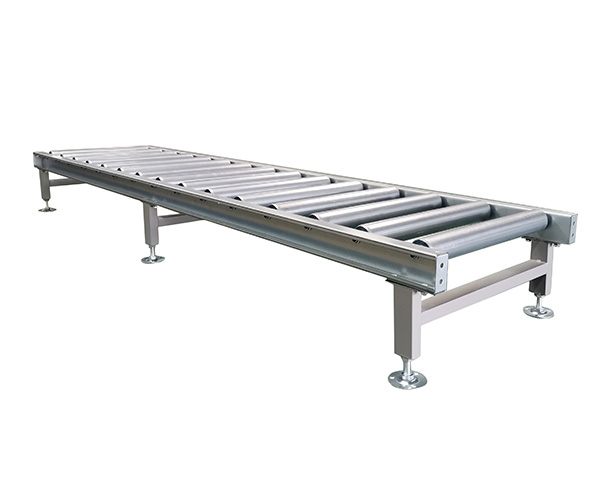
Inside many factories, the biggest delay does not come from the main machine. It comes from everything around it. Panels wait too long to move to the next station. Operators stop what they are doing just to push materials forward. Workpieces pile up near one machine but leave another machine idle. Managers notice the inefficiency, but they also worry that upgrading the entire transport flow will be expensive and disruptive.
This is exactly where a well-designed Unpowered Roller Conveyor Series becomes valuable. It does not try to solve every problem with complexity. Instead, it improves movement through mechanical simplicity. For factories handling flat products, boards, cartons, panels, or semi-finished workpieces, that simplicity is often the real advantage. Fewer electrical components mean fewer failure points. Lower energy demand means lower operating pressure. A straightforward structure also makes it easier to expand or adjust the line later.
Buyers are often not looking for the most complicated system. They are looking for a system that fits their daily production reality. That means stable transport, easier labor coordination, predictable upkeep, and a layout that supports future changes instead of blocking them.
What is an Unpowered Roller Conveyor Series?
An Unpowered Roller Conveyor Series is a material-handling solution that uses rollers mounted on a frame to move products through gravity, manual pushing, or connected handling actions rather than motor-driven transport. It is commonly used for straight-line transfer, buffering, workstation connection, temporary staging, and manual flow control between production areas.
Although the structure looks simple, the buying decision should not be casual. Roller diameter, roller spacing, frame material, width, height, support structure, and line length all affect real-world performance. A conveyor that is perfect for cartons may not be suitable for thin panels. A line designed for short-distance transfer may struggle in a heavy-load zone if the frame rigidity is not sufficient.
That is why experienced buyers look beyond the phrase “manual conveyor” and ask more practical questions:
- What kind of material will move on the rollers?
- How heavy is each item?
- Will operators push products manually, or will gravity assist the movement?
- Does the factory need straight transport only, or does it also need transfer, turning, or trolley-related support?
- Will the line remain fixed, or does it need future extension?
What buyer problems can it solve?
Most buyers do not start with the conveyor itself. They start with frustration. Their workshop may already be producing well enough, but internal transport keeps reducing that efficiency. An Unpowered Roller Conveyor Series addresses several recurring problems.
- Too much manual carrying: When operators spend valuable time lifting, dragging, or repositioning workpieces, output suffers and physical fatigue increases.
- Line bottlenecks: If one process finishes faster than the next, products accumulate in awkward areas and block movement.
- Unstable handover between stations: Without a proper transport structure, products are often placed temporarily on the floor, on random tables, or on unsuitable surfaces.
- Budget pressure: Some factories need better flow but cannot justify a fully powered system for every section.
- Maintenance anxiety: Buyers who have dealt with sensor errors, motor faults, or control issues may prefer a simpler structure for selected production zones.
These pain points are especially common in facilities where material transfer is repetitive, predictable, and relatively linear. In those conditions, complexity does not always create value. Sometimes it only adds cost.
| Customer Problem | Operational Impact | How an Unpowered Roller Conveyor Series Helps |
|---|---|---|
| Frequent manual lifting | Higher labor fatigue and slower transfer | Creates a smoother path for manual push or gravity-assisted movement |
| Material waiting between processes | Reduced line rhythm and local congestion | Provides organized buffering and controlled flow between stations |
| Limited budget for automation | Upgrade plans get delayed | Offers a lower-complexity option for suitable transport zones |
| Maintenance concerns | Fear of downtime and spare-part dependence | Reduces system complexity with a more direct mechanical structure |
| Future layout changes | Risk of buying a rigid system | Supports modular planning and practical reconfiguration |
Which applications are best suited to this system?
An Unpowered Roller Conveyor Series is often a strong fit for industries and workshops that handle flat or stable-bottom products. It is particularly useful when the goal is not full automatic routing but orderly, efficient movement from one point to another.
Common applications include:
- Furniture panel transfer
- Board and sheet movement between processing stations
- Packing and sorting assistance
- Temporary buffering before inspection or wrapping
- Manual assembly or finishing areas
- Trolley-supported internal movement across workshop sections
For example, a factory may use powered equipment at the main cutting or edge-processing stage, then connect certain downstream sections with an Unpowered Roller Conveyor Series to reduce energy use in lower-intensity zones. Another factory may use it to create a clean, organized transport path between worktables where operators still need direct physical access to each workpiece.
In other words, the right choice depends on the role of the line. If that role is transport, buffering, alignment, or simple transfer, an unpowered solution often makes strong economic and operational sense.
How should buyers choose the right configuration?
Choosing the right Unpowered Roller Conveyor Series is less about chasing a catalog model and more about matching the equipment to actual factory conditions. A good supplier should not start by asking only for quantity. They should ask about your workflow.
Here are the factors buyers should review before making a decision:
- Product size: The conveyor width and roller arrangement should fit the smallest and largest items that will travel across it.
- Load weight: Heavier workpieces may require stronger rollers, reinforced frames, and closer support spacing.
- Bottom surface condition: The product base should be stable enough to move smoothly without tipping or snagging.
- Transport distance: Longer lines may need section planning, support optimization, or transfer accessories.
- Workshop layout: The line should fit the real path of production instead of forcing operators to work around it.
- Handling method: Manual push, gravity movement, cross-transfer, and rail-supported movement may require different structures.
- Expansion plans: If the line may change later, modular thinking matters now.
Many buyers make the mistake of focusing only on price per meter. That number matters, but it does not show whether the conveyor will actually fit the job. A low initial cost becomes expensive quickly if the line jams, bends under load, or creates operator inconvenience.
This is one reason companies often value suppliers that can discuss layout-based customization rather than simply shipping standard sections. Guangdong Fortran Machinery Co.,ltd. is the kind of company buyers may look at when they want a solution aligned with production flow instead of a one-size-fits-all answer.
Is an unpowered system always better than a powered one?
No, and that is exactly why buyers should evaluate honestly. An Unpowered Roller Conveyor Series is not a universal replacement for powered conveying. It is a strong option in the right task range.
| Factor | Unpowered Roller Conveyor Series | Powered Conveyor |
|---|---|---|
| Energy use | Very low during operation | Higher due to motorized drive |
| System complexity | Simpler mechanical structure | More electrical and control components |
| Maintenance burden | Usually easier for basic upkeep | Can require more technical service |
| Flow automation | Limited compared with powered systems | Better for automatic routing and synchronized movement |
| Initial investment | Often more budget-friendly | Usually higher |
| Best use case | Manual transfer, buffering, simple movement | Continuous, automated, high-throughput processes |
If your line needs constant speed control, automatic sorting, sensor-based routing, or synchronized integration with multiple machines, a powered conveyor may be the better fit. But if your main pain point is moving materials efficiently between stations without overbuilding the system, the unpowered option deserves serious attention.
What mistakes should buyers avoid before ordering?
- Buying by appearance only: Similar-looking conveyors can differ greatly in bearing quality, frame strength, and service life.
- Ignoring real product dimensions: A line that handles large panels well may perform poorly with smaller items if spacing is wrong.
- Forgetting operator behavior: A technically acceptable layout may still be awkward in real use if workers cannot push, turn, or access materials comfortably.
- Skipping growth planning: Today’s short transfer section may become tomorrow’s connected production line.
- Underestimating environment: Dust, debris, impact frequency, and handling intensity all affect durability expectations.
The safest purchasing approach is to describe the application honestly, share the layout clearly, and ask the supplier to respond to the process rather than just the keyword “conveyor.”
How can users keep performance stable over time?
One reason many buyers prefer an Unpowered Roller Conveyor Series is that daily upkeep is usually more manageable than with highly automated equipment. That said, simple does not mean maintenance-free.
Good practice includes:
- Keeping rollers clean so debris does not interfere with movement
- Checking alignment regularly, especially in heavy-use sections
- Inspecting frame supports and connections for looseness
- Watching for uneven roller wear in high-load zones
- Reviewing whether layout changes have created awkward push angles or impact points
When buyers plan maintenance from the beginning, the conveyor stays useful much longer. The best outcome is not just that the line keeps moving. It is that the line keeps supporting productivity without becoming a hidden source of daily friction.
FAQ
Q1: Is an Unpowered Roller Conveyor Series suitable for heavy products?
Yes, but only when the roller specification, frame strength, and support structure match the actual load. Heavy-duty use should never rely on a light standard setup without confirmation.
Q2: Can this type of conveyor be customized for a specific workshop layout?
Yes. In many projects, customization is one of the most important advantages because factories rarely share the same spacing, workflow, or transfer direction requirements.
Q3: Does an unpowered conveyor reduce labor completely?
No. It reduces unnecessary handling effort and improves movement efficiency, but it does not replace all labor. Its value lies in making manual flow more organized and less wasteful.
Q4: Is it only useful for furniture factories?
No. It is widely applicable wherever stable-bottom items, flat workpieces, cartons, panels, or semi-finished products need controlled manual or gravity-assisted movement.
Q5: How do I know whether I should choose powered or unpowered conveying?
Start with the process objective. If you need simple transfer, buffering, and cost-conscious movement, unpowered may be ideal. If you need synchronized automation and active control, powered systems may be more suitable.
Why is this conveyor option worth serious consideration?
Factories do not become more efficient just because they buy more equipment. They become more efficient when every section of the workflow matches the actual task. That is why an Unpowered Roller Conveyor Series remains such a practical choice. It helps solve transport inefficiency without forcing buyers into unnecessary energy use, excessive technical complexity, or inflated maintenance pressure.
For workshops that need smoother panel transfer, cleaner workstation connection, and a more economical way to improve internal flow, this kind of solution can be a smart step forward. If you are comparing layouts, reviewing capacity needs, or trying to reduce wasted movement in your line, Guangdong Fortran Machinery Co.,ltd. can be a worthwhile partner to evaluate. If you want a more suitable conveyor plan for your factory, contact us and start the conversation with your layout, product dimensions, and production goals.